From Himalayan meadows to a lab in Gurugram: swipe or use the arrows to travel through the story.
Long ago · Tibetan plateau
The herders’ discovery
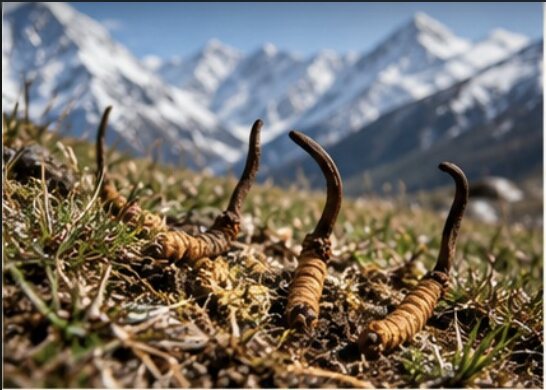
Himalayan folklore tells of yak herders who noticed their animals grew lively after grazing in high meadows where a strange “summer grass, winter worm” grew. The herders began to gather it for themselves.
15th century · Tibet
Written down for the first time
The Tibetan physician Zurkhar Nyamnyi Dorje described yartsa gunbu — “summer grass, winter worm” — as a prized tonic in one of the earliest known written records of the fungus.
1694 · Qing dynasty, China
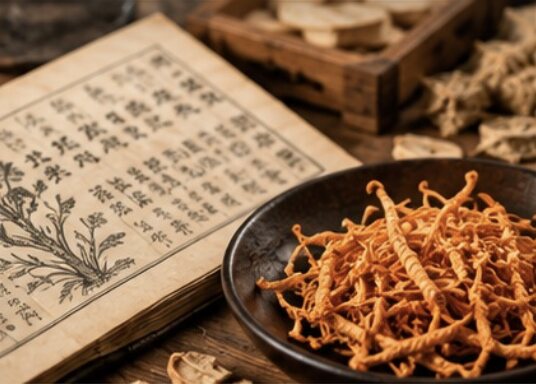
Into the Chinese materia medica
Wang Ang’s herbal Ben Cao Bei Yao recorded dong chong xia cao. It was traditionally used as a tonic for energy and recovery, and in Traditional Chinese Medicine it is linked with the Lung and Kidney.
18th–19th century · Imperial China
A tonic for the few
Rare and costly to gather, wild Cordyceps became a gift of status, often slow-cooked with duck or chicken. Stories of its use at the imperial court added to its legend.
1950 · United Kingdom
Cordycepin is discovered
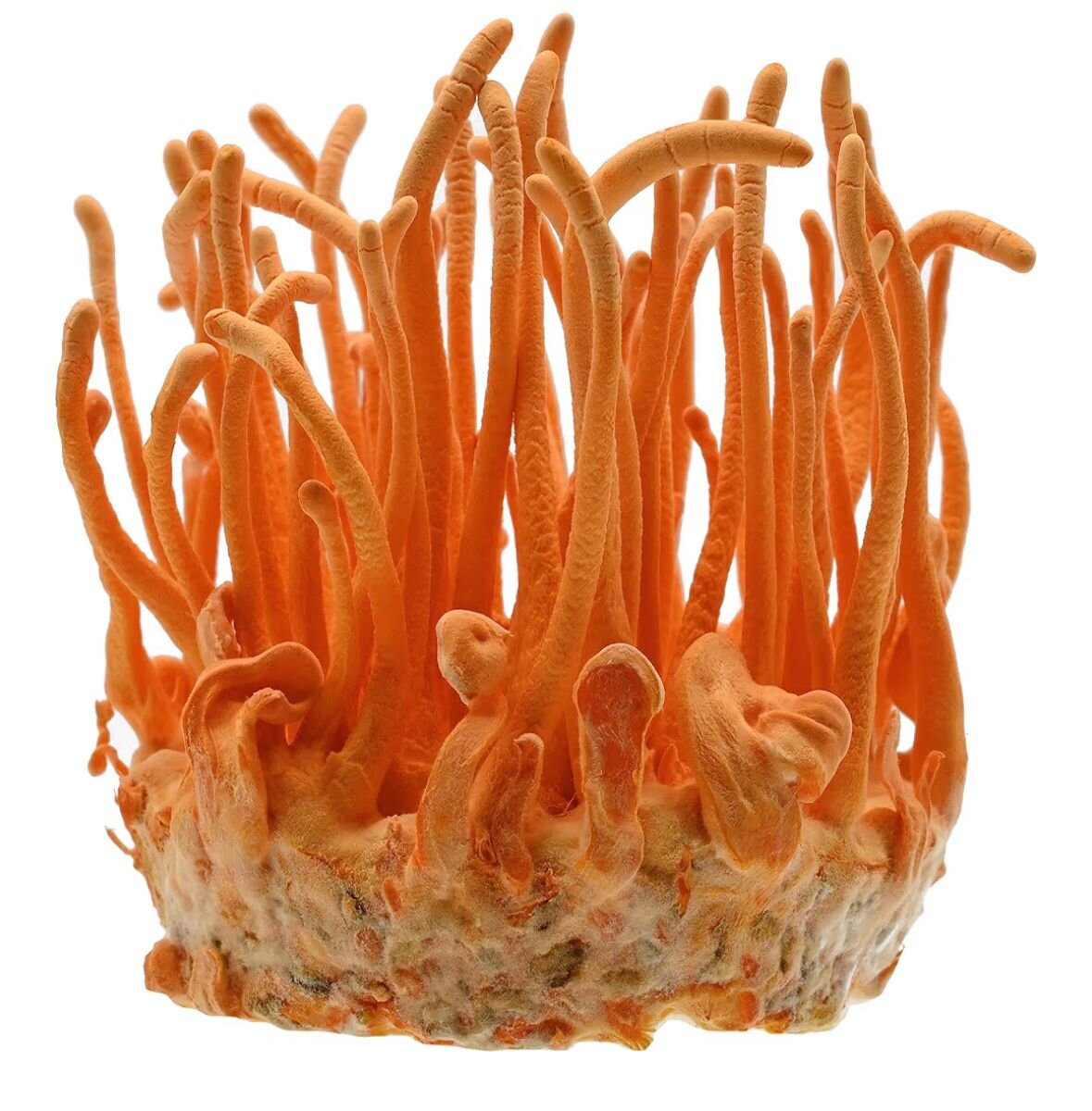
Scientists isolated a new compound, cordycepin, from cultures of Cordyceps militaris — the same species we grow today. Research into it continues worldwide.
1993 · Beijing
The world takes notice
At China’s National Games, runners coached by Ma Junren broke world records. Their coach credited a tonic containing Cordyceps; the results were later questioned, but the story made Cordyceps famous around the world.
2000s · Himalaya
Wild Cordyceps grows scarce
Demand drove wild Ophiocordyceps sinensis prices to many lakhs of rupees per kilo, and heavy harvesting put pressure on fragile mountain meadows. The wild species is now listed as Vulnerable by the IUCN.
Today · Asia & India
Lab-grown changes the story
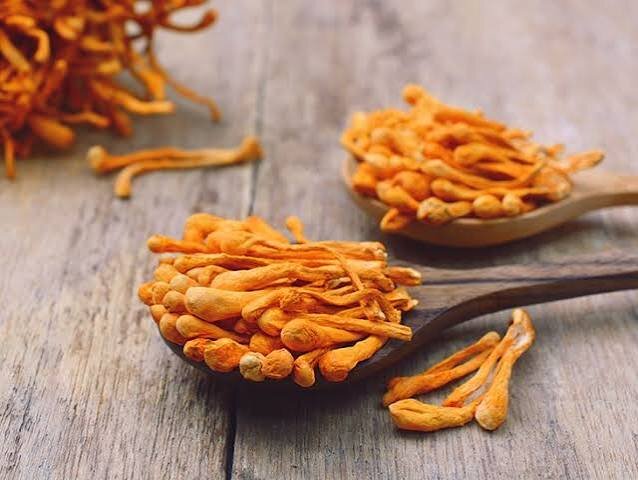
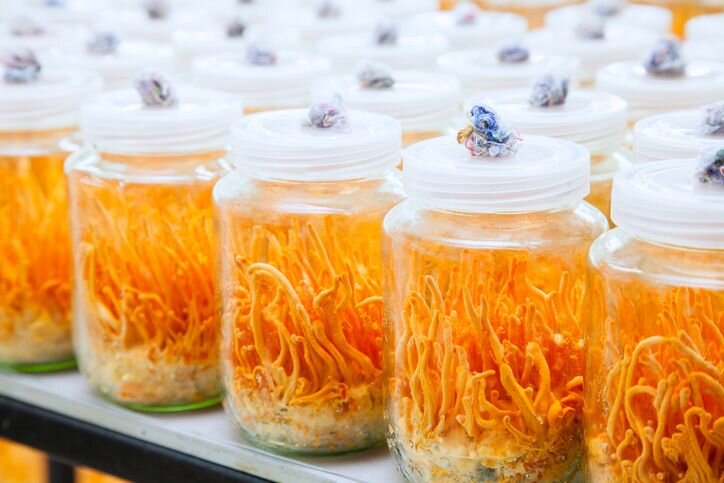
Cordyceps militaris can be grown on grain in clean rooms, without insects and without touching the wild. Cultivation spread across China, Korea and Thailand, and in recent years across India.
Now · Gurugram, at the edge of the Aravallis
Terravia
Our family grows Cordyceps militaris in our own lab in Gurugram — from master culture to harvest, dried with care and tested lot by lot.