“Winter worm, summer grass”
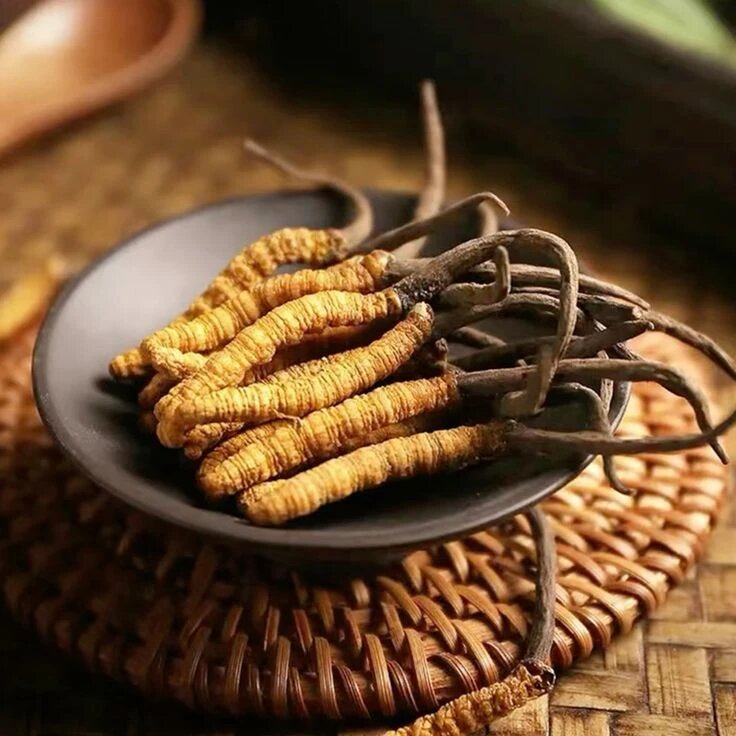
The Chinese name dong chong xia cao means “winter worm, summer grass”. It describes the wild Cordyceps of the Tibetan plateau: in winter a caterpillar lies underground; by summer a slender fungus has grown from it, poking up through the grass like a blade. In Tibetan it is called yartsa gunbu, and in the Indian and Nepali Himalaya it is known as Keeda Jadi or Yarsagumba.
Written into history
One of the earliest written records comes from the 15th-century Tibetan physician Zurkhar Nyamnyi Dorje, who described it as a prized tonic. It entered the Chinese materia medica in 1694, in Wang Ang’s herbal Ben Cao Bei Yao, and was described in more detail in later texts. Because it was so rare, it became a gift of status — and stories link it with the imperial court.
How TCM thinks about Cordyceps
TCM describes foods and herbs by their nature and the organ systems they relate to. Cordyceps is traditionally described as sweet and neutral, and associated with the Lung and Kidney. It has traditionally been used as a tonic for energy and vitality, for recovery after illness or hard work, and for support with breathing and stamina.
In TCM, Cordyceps is seen as a gentle, balancing tonic — something to take regularly as part of daily life, often in food.
In the kitchen
In Chinese homes, Cordyceps is often slow-cooked with duck or chicken, red dates and ginger into a nourishing broth. You can try a version yourself with our Cordyceps soup recipe.
What modern research says
Scientists have studied Cordyceps for decades. Studies suggest compounds such as cordycepin and polysaccharides may support energy, stamina and the body’s natural defences, but much of the research is in the laboratory or in small groups of people, and more work is needed. We think of Cordyceps as a traditional food with a fascinating history — not a medicine.
Why lab-grown Cordyceps militaris
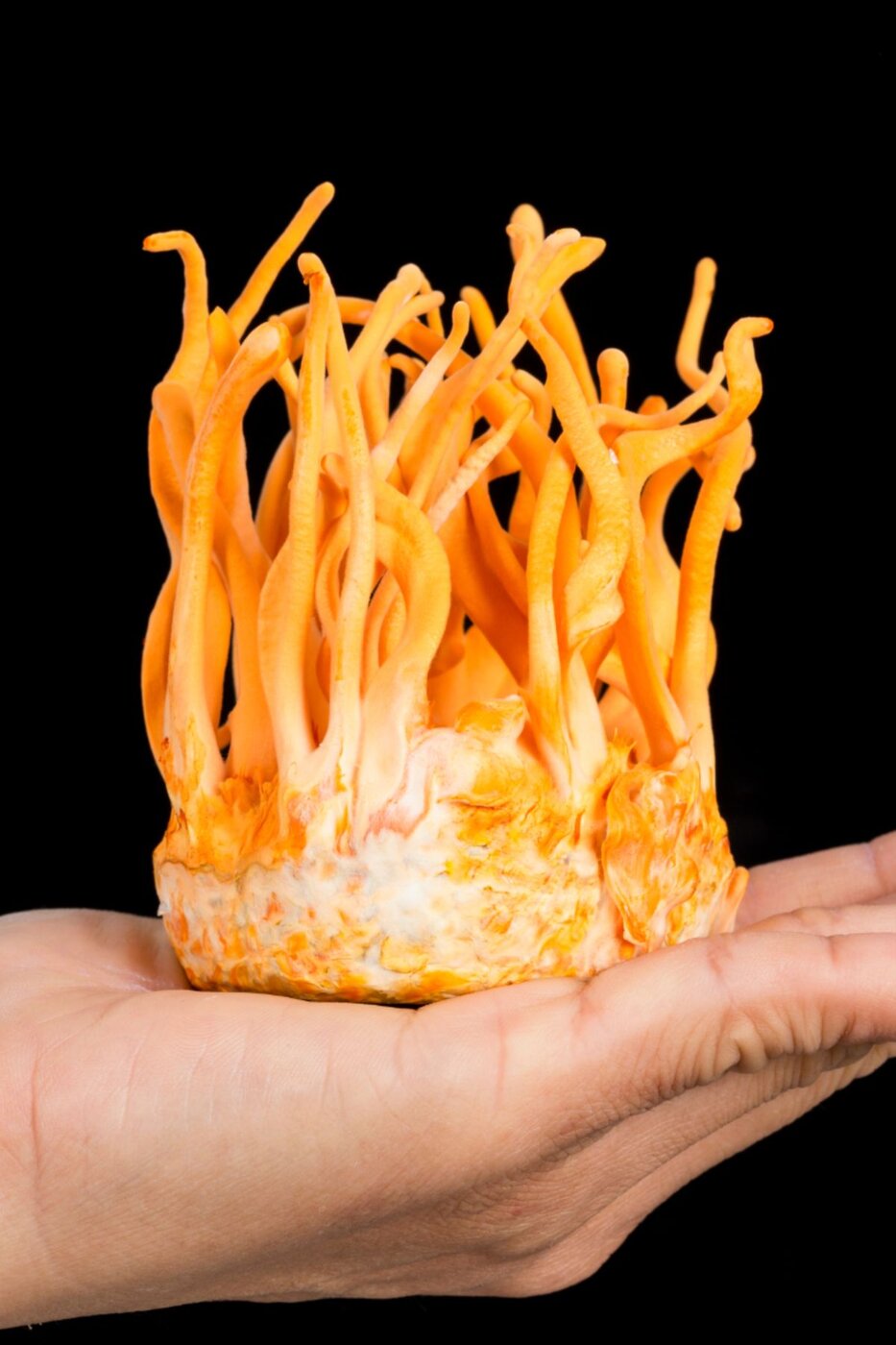
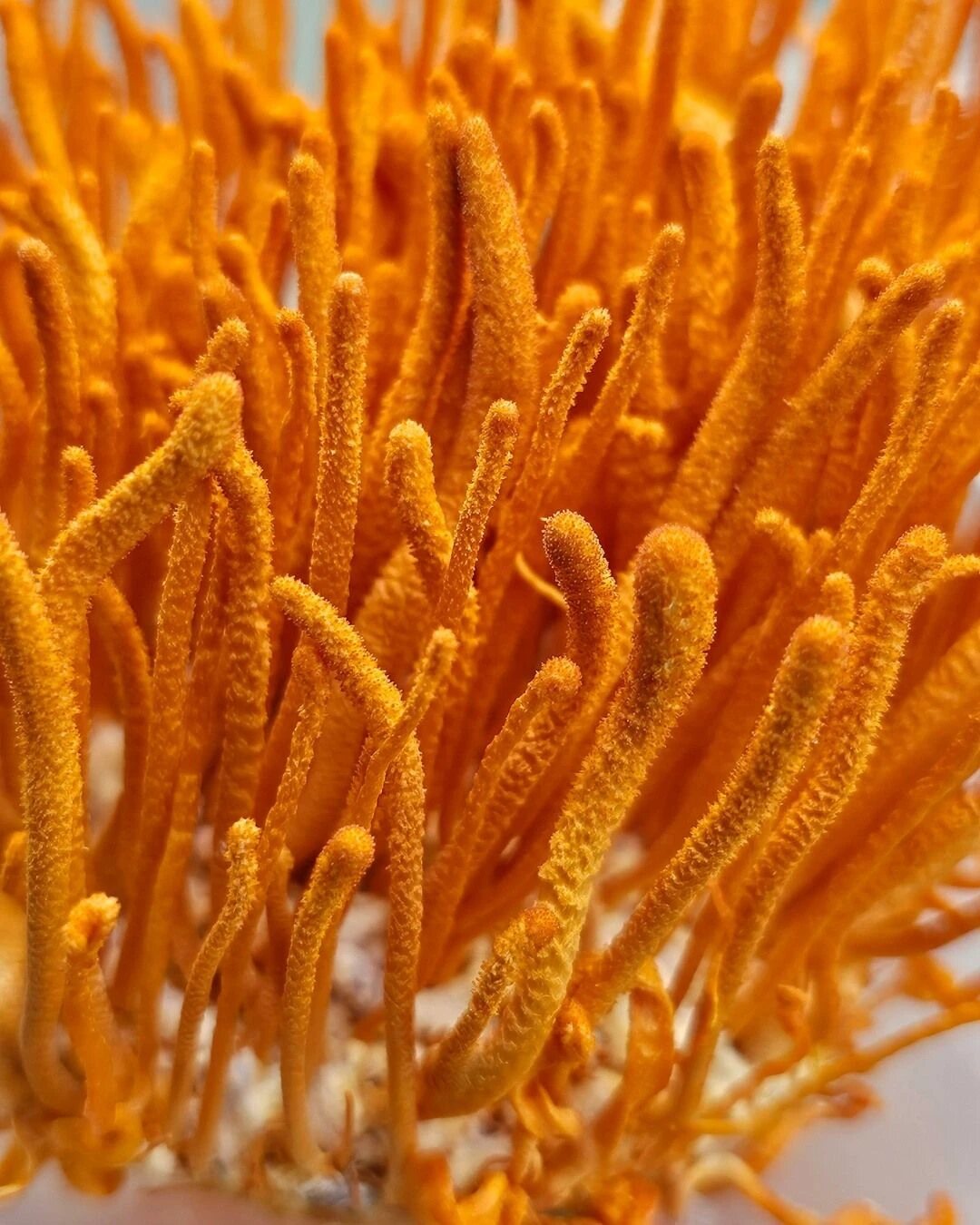
Wild Cordyceps is now very rare and expensive, and heavy harvesting has put pressure on fragile mountain meadows. Cordyceps militaris, a close relative, can be grown on grain in clean rooms — no insects, no harvesting from the wild — and it naturally contains more cordycepin. Many TCM shops and food brands in China and Korea now use cultivated militaris.
Explore the full story in our interactive Cordyceps through time timeline.
For information only. Not medical advice. Consult a doctor, especially if pregnant or on medication.