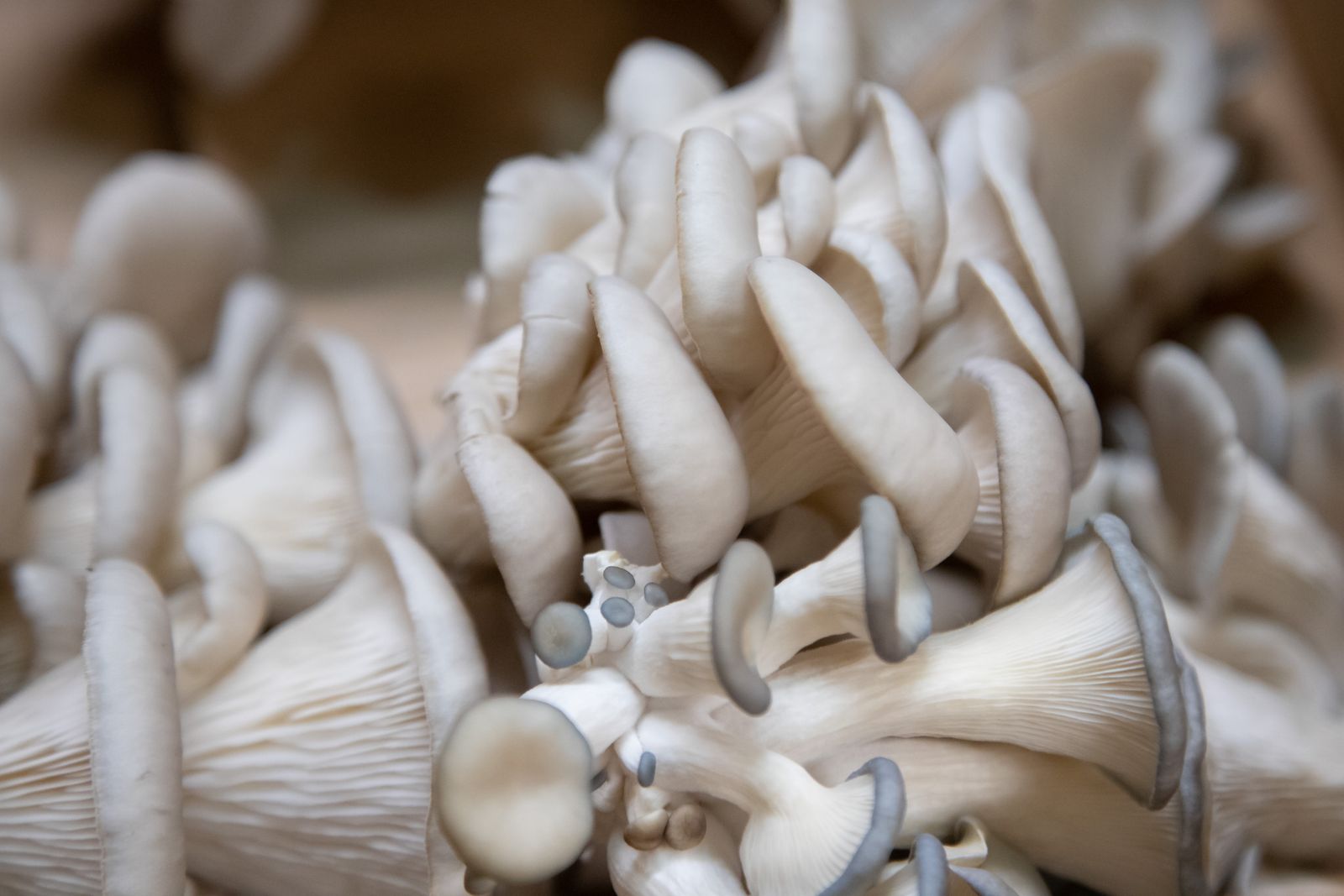
The interest in oyster mushrooms (Pleurotus ostreatus) is mostly about their cell walls. Those walls are rich in beta-glucans — long-chain polysaccharides that immune cells appear to recognise through specific receptors.
What a beta-glucan is
Beta-glucans are structural fibres, not nutrients in the usual sense. Their branching pattern — the way the glucose units are linked — is what makes the mushroom kind biologically distinct from the beta-glucans in oats.
How they are measured
The honest way to compare mushroom material is a gravimetric beta-glucan assay, which separates true beta-glucan from the alpha-glucan starch that grain-grown mycelium carries. A number on a certificate is worth more than a name on a label.
- True beta-glucan — the fraction that matters, reported gravimetrically.
- Alpha-glucan — grain starch from the substrate, not a functional fibre.
- Total glucan — the sum; a high total alone tells you nothing.
The value of a mushroom ingredient is in the number on its certificate, not the picture on its bag.