What does “superfood” really mean?
There is no official definition. People use the word for natural foods that pack many useful nutrients and compounds into a small amount, like turmeric, amla or moringa. Cordyceps militaris earns a place in that list for three reasons: what’s inside it, centuries of traditional use, and a growing body of modern research.
What’s inside Cordyceps militaris
- Cordycepin: the compound this mushroom is best known for. It was first isolated from Cordyceps militaris, and much of the scientific interest centres on it.
- Adenosine: a natural compound involved in how cells produce and use energy (ATP).
- Polysaccharides and beta-glucans: complex carbohydrates found in many mushrooms, widely studied for their role in immunity and overall wellbeing.
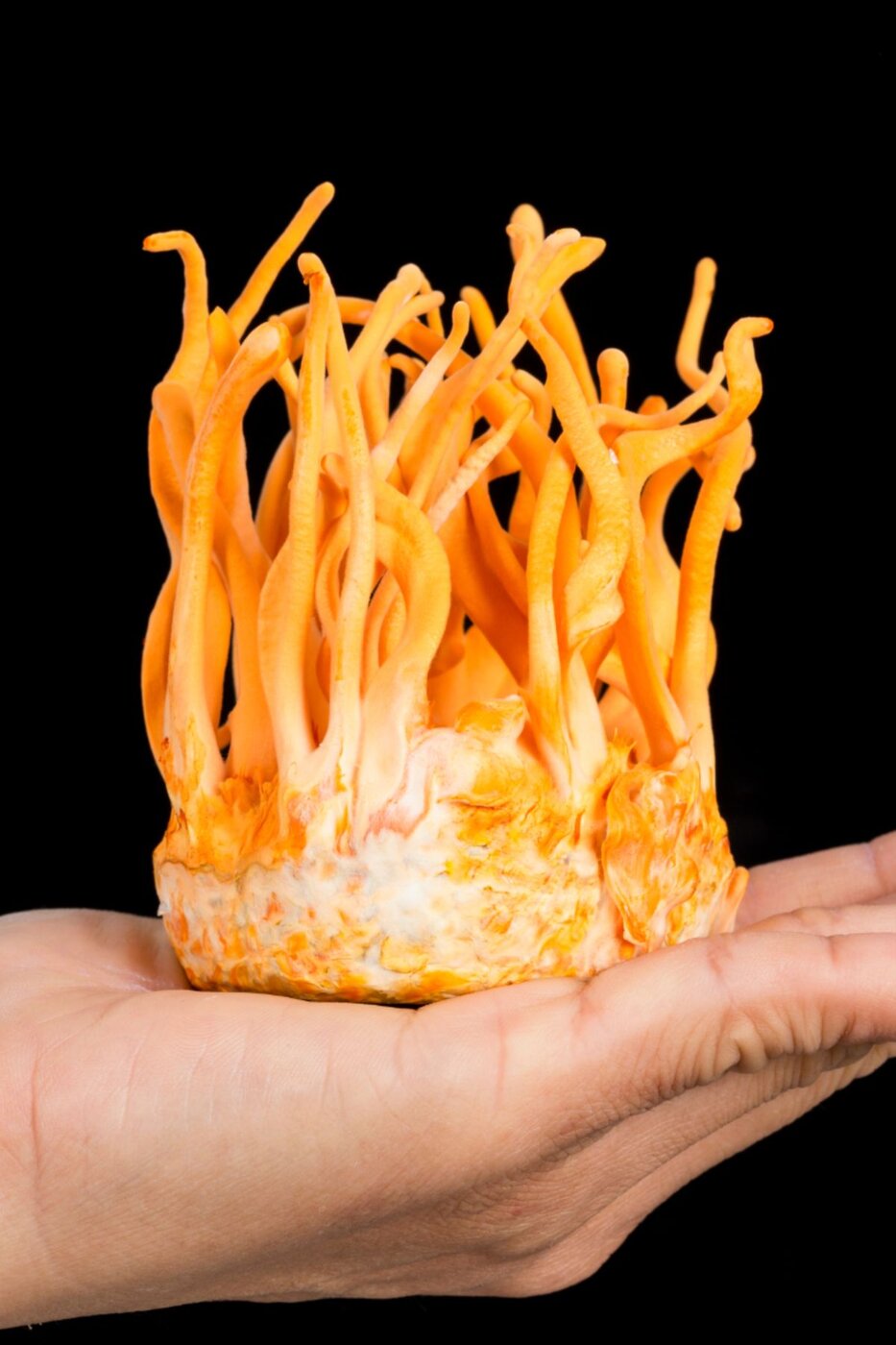
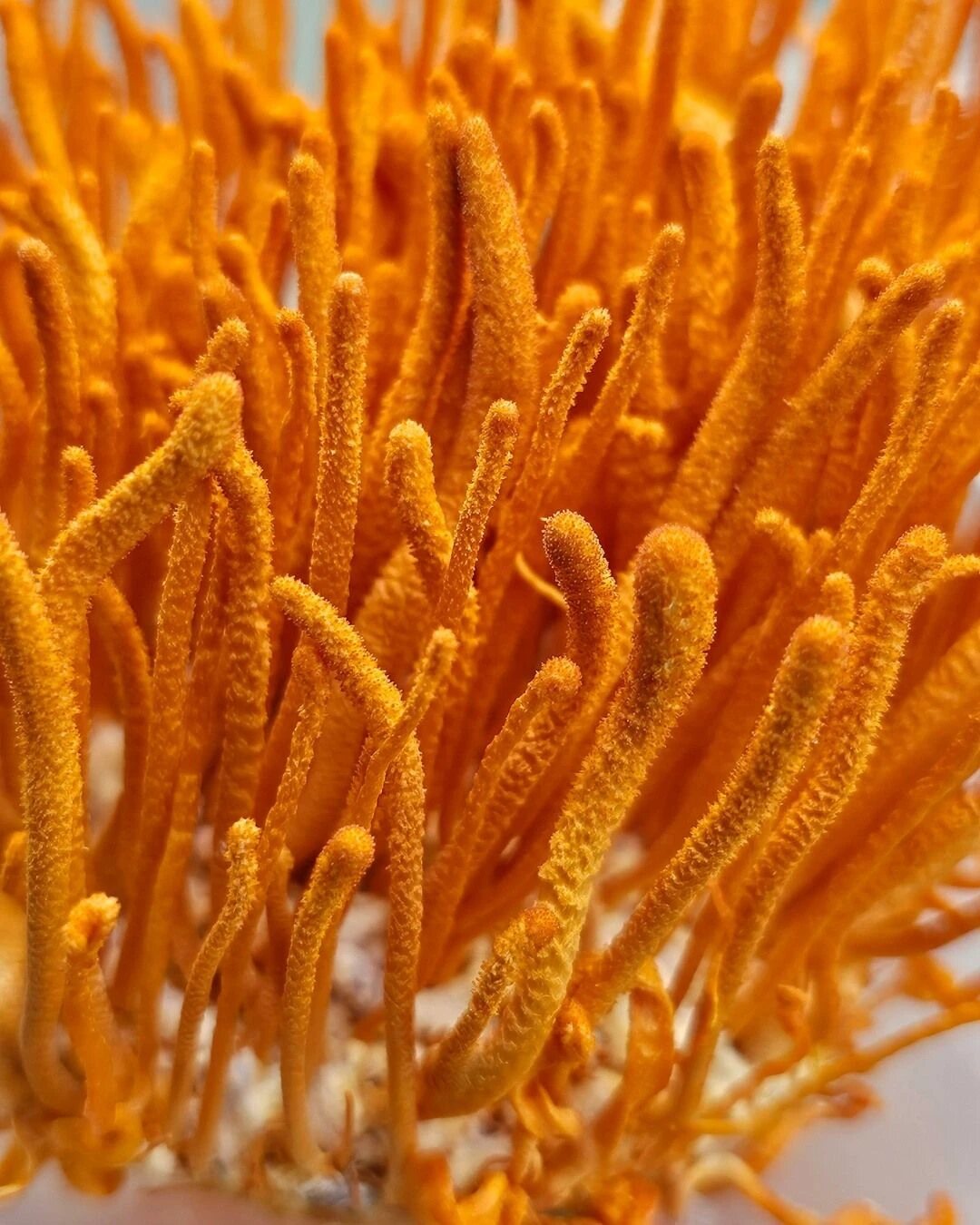
- Carotenoids: natural antioxidant pigments that give the fruiting bodies their orange colour.
- Protein, amino acids, B vitamins and minerals such as zinc and selenium.
A tonic for energy, stamina and vitality
In Traditional Chinese Medicine and Himalayan cultures, Cordyceps has been traditionally used as a tonic for energy, stamina, breathing, recovery and vitality, for both men and women. Wild Cordyceps was so rare that it was once kept for emperors. In India, the wild Himalayan form is known as Keeda Jadi, and herders in the high mountains have long valued it for living and working at altitude. Read more in Cordyceps in Traditional Chinese Medicine.
The athletes who made Cordyceps famous
Cordyceps became world-famous in 1993, when Chinese women runners broke world records in the 1,500 m, 3,000 m and 10,000 m at China’s National Games. Their coach, Ma Junren, told reporters their diet included Cordyceps. Many experts later questioned how those records were set, so the story proves nothing about Cordyceps. It did, however, put this little orange mushroom in front of athletes and scientists around the world.
Since then, researchers have asked a simple question: can Cordyceps help the body use oxygen and keep going for longer?
Endurance and oxygen: what studies suggest
Two measures come up again and again. VO₂ max is the most oxygen your body can use during hard exercise. The lactate or ventilatory threshold is the point where breathing gets hard and muscles start to tire. Here is what the main human studies found.
Older adults · 12 weeks · 2010
Twenty healthy adults aged 50–75 took a Cordyceps supplement (Cs-4) or a placebo. In the Cordyceps group, the threshold at which lactate builds up rose by about 10.5%. VO₂ max did not change in either group. Suggests better tolerance to exercise.
Young adults · 1 and 3 weeks · 2017
Twenty-eight young adults took 4 g a day of a mushroom blend containing Cordyceps militaris, or a placebo. After one week there was no clear difference. In a smaller group of ten who continued for three weeks, VO₂ max improved and they lasted longer before exhaustion. Suggests benefits build with regular use.
Trained cyclists · 5 weeks · 2004
Endurance-trained cyclists took a Cordyceps supplement for five weeks. Their VO₂ max and performance did not improve compared with placebo. No effect in highly trained athletes.
What this means: studies suggest Cordyceps may support stamina and oxygen use, especially in people who are older or less trained, and especially when taken regularly for a few weeks. In elite athletes, results have been disappointing. The studies are small, so researchers say more work is needed.
Why might it work? Researchers think it may be linked to adenosine and cordycepin, which play a part in how cells make energy, and to better use of oxygen. This is still being studied.
Libido and vitality
Cordyceps has a long history as a traditional tonic for vitality and libido. Modern research is at an early stage:
- In several animal studies, mostly on rats, Cordyceps militaris raised testosterone levels and improved sperm quality and mating behaviour.
- Studies in ageing rats suggest it may help maintain sexual function with age.
- There are not yet good human trials, so we cannot say it will do the same for people.
Other areas researchers are exploring
- Antioxidant activity: helping the body handle everyday oxidative stress.
- Immune support: mainly linked to its beta-glucans.
- Healthy ageing and recovery: early laboratory and animal studies.
Most of this work is in the lab or in animals. We share it as interesting science, not as a promise.
Why lab-grown Cordyceps militaris matters
| Wild Cordyceps (Keeda Jadi) | Lab-grown Cordyceps militaris | |
|---|---|---|
| Availability | Rare, seasonal, hand-collected high in the Himalayas | Grown all year round |
| Price | Very high | Affordable |
| Cordycepin | Varies a lot | Measured on every lot (ours: 11% or more) |
| Insects | Grows on caterpillar larvae | Grown on grain, no insects |
Most modern research uses Cordyceps militaris or lab-grown Cordyceps, not wild Keeda Jadi. Lab cultivation also spares fragile mountain ecosystems. Learn the difference in Cordyceps militaris vs Cordyceps sinensis vs Keeda Jadi.
How people take it
- A warm cup of Cordyceps tea made from a few dried strands.
- A spoon of powder in coffee, milk or a smoothie, often before a workout.
- A few strands simmered in soups and broths.
In the studies above, people took about 1–4 g a day. Try our Cordyceps recipes to get started.
Who should be careful
Speak to your doctor before taking Cordyceps if you are pregnant or breastfeeding, take blood-thinning medicines or medicines for blood sugar, have an autoimmune condition, or have surgery coming up.
Dried fruiting bodies and powder from our lab in Gurugram.
Sources
Chen S. et al. (2010), Journal of Alternative and Complementary Medicine: Cs-4 and exercise in healthy older subjects. Hirsch K.R. et al. (2017), Journal of Dietary Supplements: Cordyceps militaris blend and high-intensity exercise. Parcell A.C. et al. (2004), International Journal of Sport Nutrition and Exercise Metabolism: Cordyceps and endurance in trained cyclists. Cultured Cordyceps militaris and sexual performance in male rats (2020).
For information only. Not medical advice. Consult a doctor, especially if pregnant or on medication.