A mushroom, not a herb
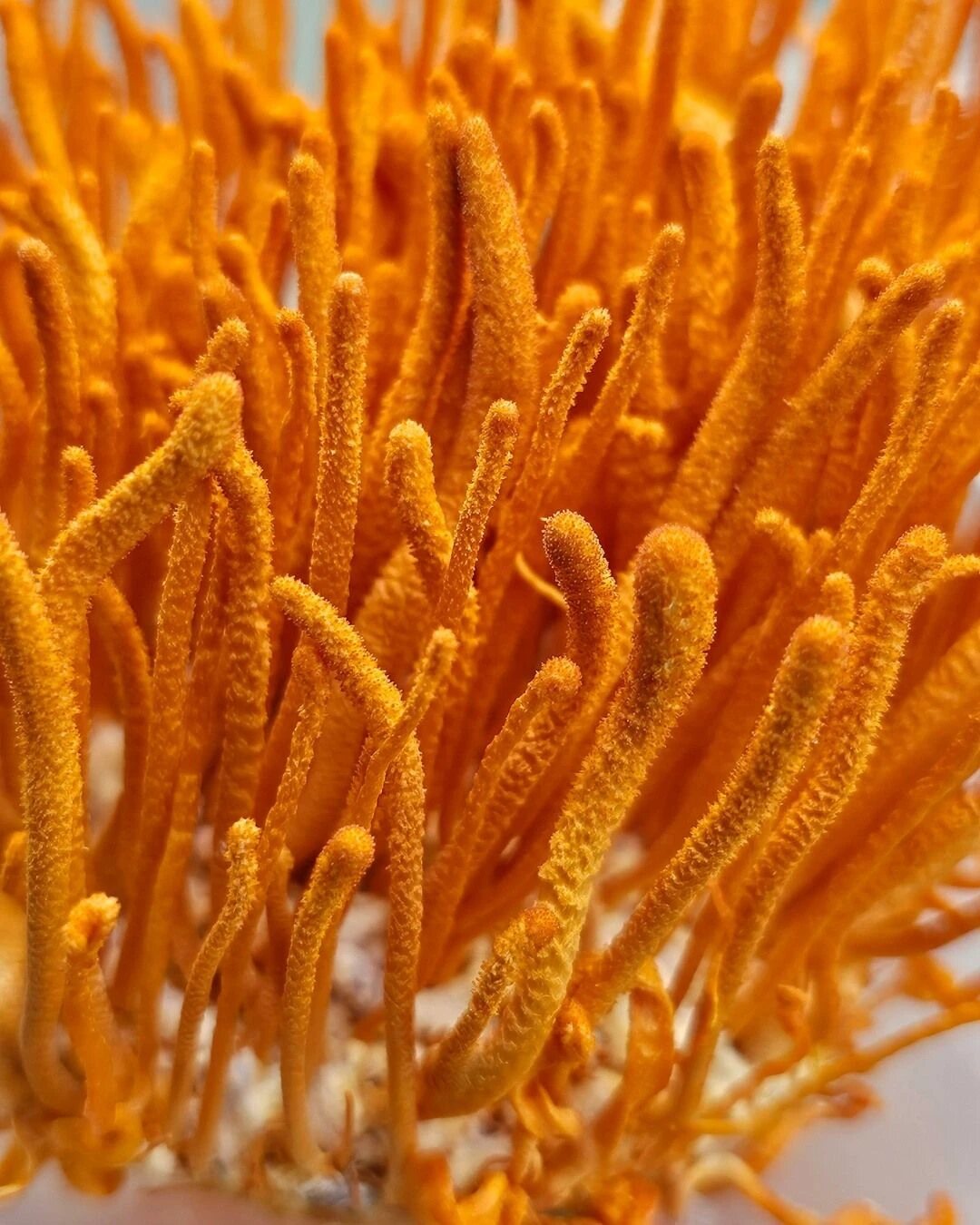
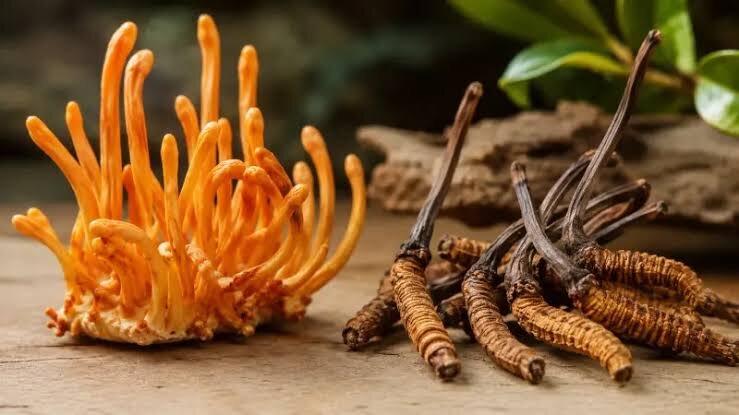
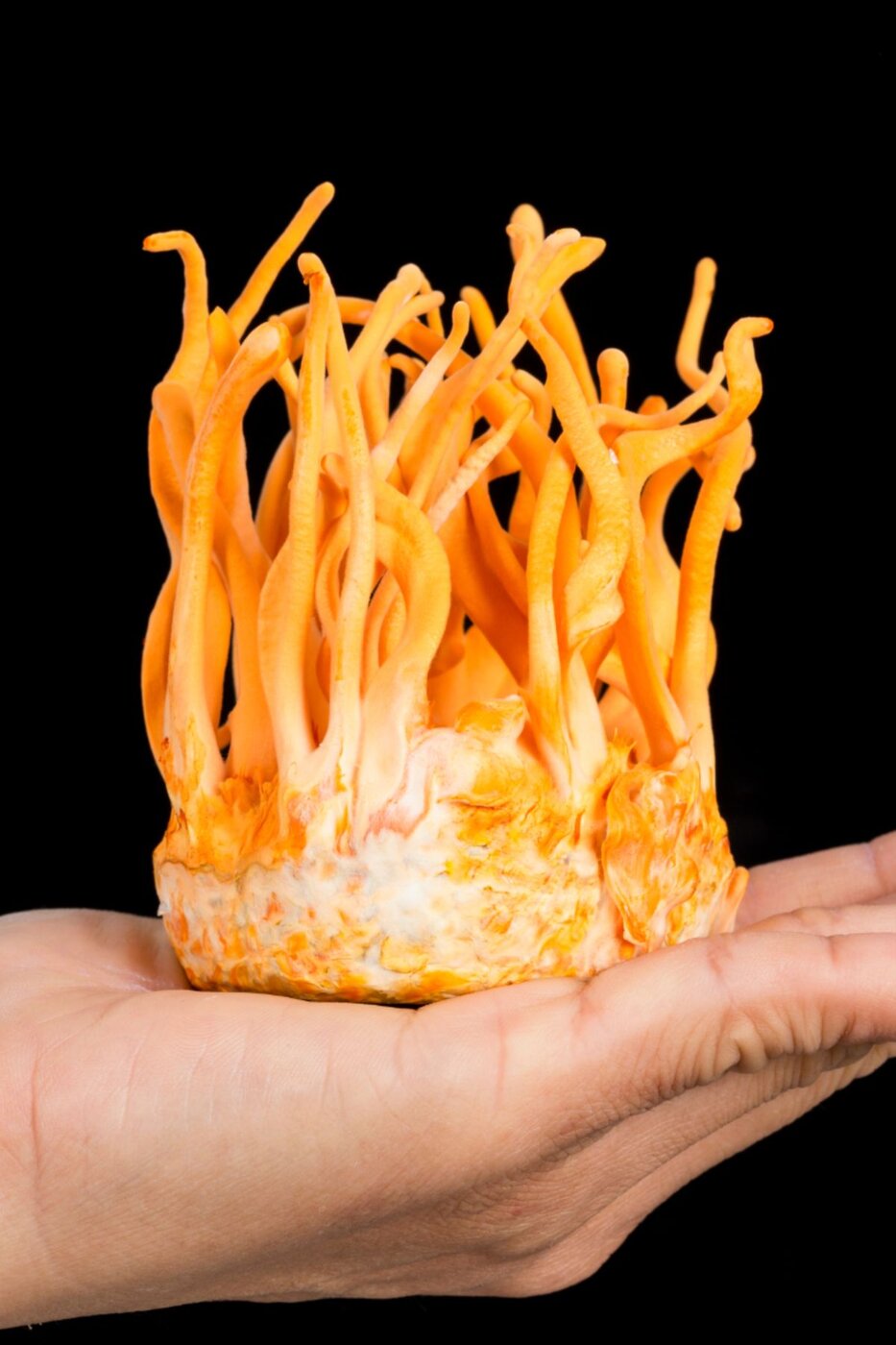
Cordyceps militaris is a fungus — a relative of the mushrooms you know — that forms slender, bright orange “fruiting bodies” a few centimetres tall. In nature it grows on insect pupae in forests across Asia, Europe and North America. On a farm or in a lab, it is grown on a grain base such as brown rice, so cultivated Cordyceps contains no insects at all.
Why people value it
Cordyceps has a long history in Traditional Chinese Medicine and Himalayan cultures, where it is traditionally used as a tonic for energy, stamina and recovery. Today it is enjoyed in teas, soups, coffees and supplements, especially across China, Korea and, increasingly, India.
What’s inside
- Cordycepin — the compound Cordyceps militaris is best known for. It was first isolated from this very species in 1950, and studies suggest it is responsible for much of the interest in the mushroom.
- Adenosine — a natural compound found throughout living cells.
- Polysaccharides — complex carbohydrates (including beta-glucans) common to many mushrooms.
- Carotenoids — the natural pigments that give the fruiting bodies their orange colour.
Cordycepin content varies a lot between producers. That is why we measure it by HPLC (a laboratory test) on every lot — our dried fruiting bodies contain 11% or more.
How it’s grown
- A pure master culture is grown in a sterile lab.
- It is transferred into jars of sterilised grain and nutrient broth.
- The jars sit in the dark for about a week while the culture spreads, then move into light.
- Over the next several weeks, orange fruiting bodies grow up out of the grain.
- They are harvested by hand and gently dried to protect their compounds.
How people use it
- Dried whole strands — simmered as a tea or added to soups.
- Powder — stirred into coffee, milk or smoothies, or filled into capsules.
- Extracts — used by supplement and food brands in their own products.
New to Cordyceps? Start with our Cordyceps recipes — a simple morning tea is the easiest way to try it.
Storing it
Keep dried Cordyceps in an airtight container, away from light, heat and moisture. Stored well, it keeps for many months.
Dried fruiting bodies, powder and substrate from our lab in Gurugram.
For information only. Not medical advice. Consult a doctor, especially if pregnant or on medication.