The short answer
- Keeda Jadi (also Yarsagumba) is the Himalayan name for wild Ophiocordyceps sinensis — the “caterpillar fungus” collected high in the mountains.
- Cordyceps sinensis is the older scientific name for that same wild species.
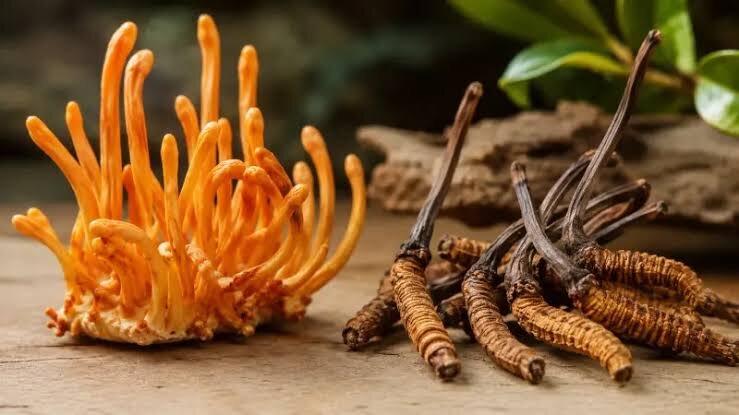
- Cordyceps militaris is a different, related species that can be cultivated. In Indian markets it is often sold as “Keeda Jadi” too.
| Wild Keeda Jadi (O. sinensis) | Cordyceps militaris | |
|---|---|---|
| Where it comes from | Collected by hand at 3,000–5,000 m in the Himalaya (Uttarakhand, Nepal, Tibet, Bhutan) | Grown in labs and farms on grain |
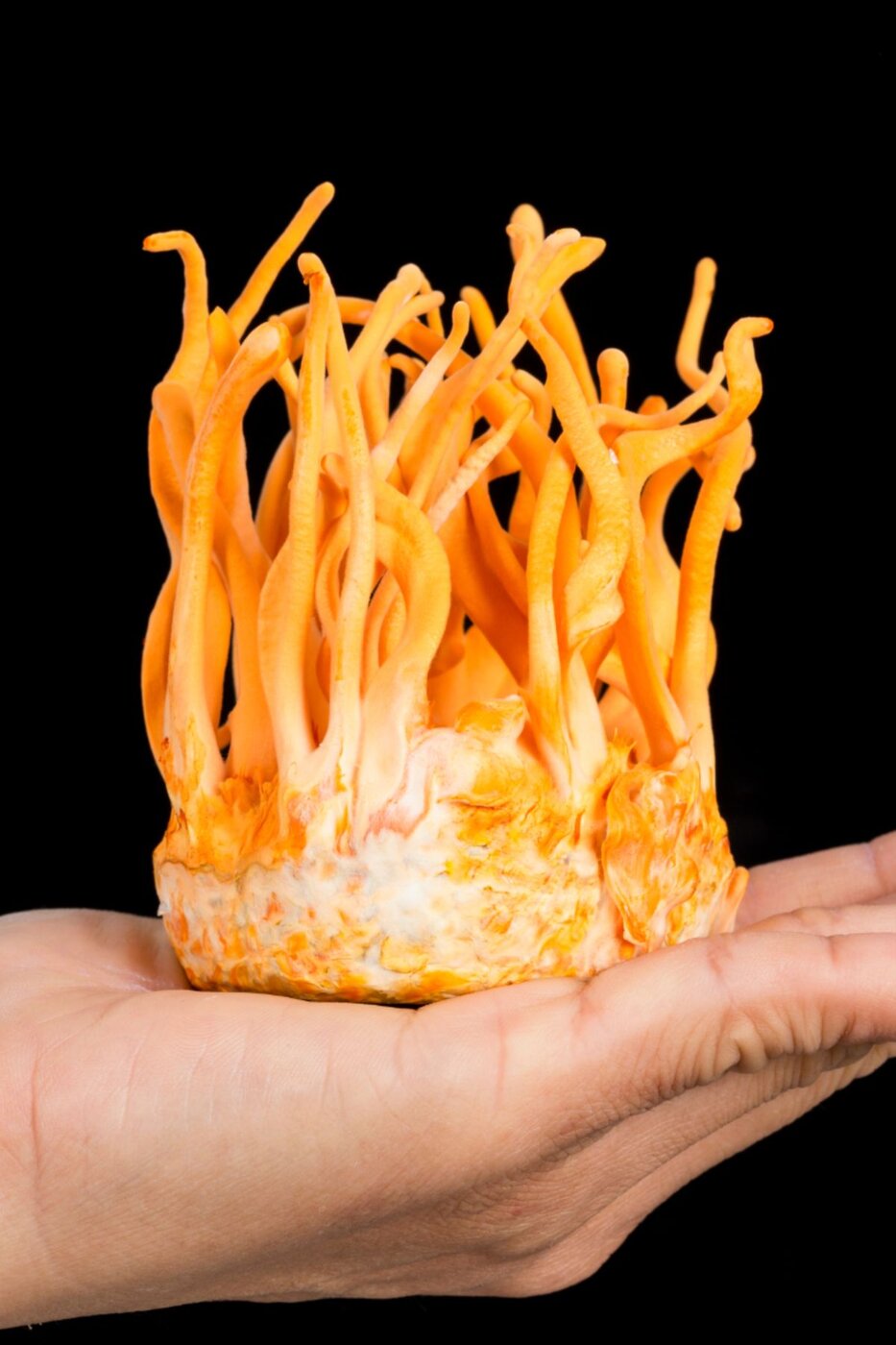
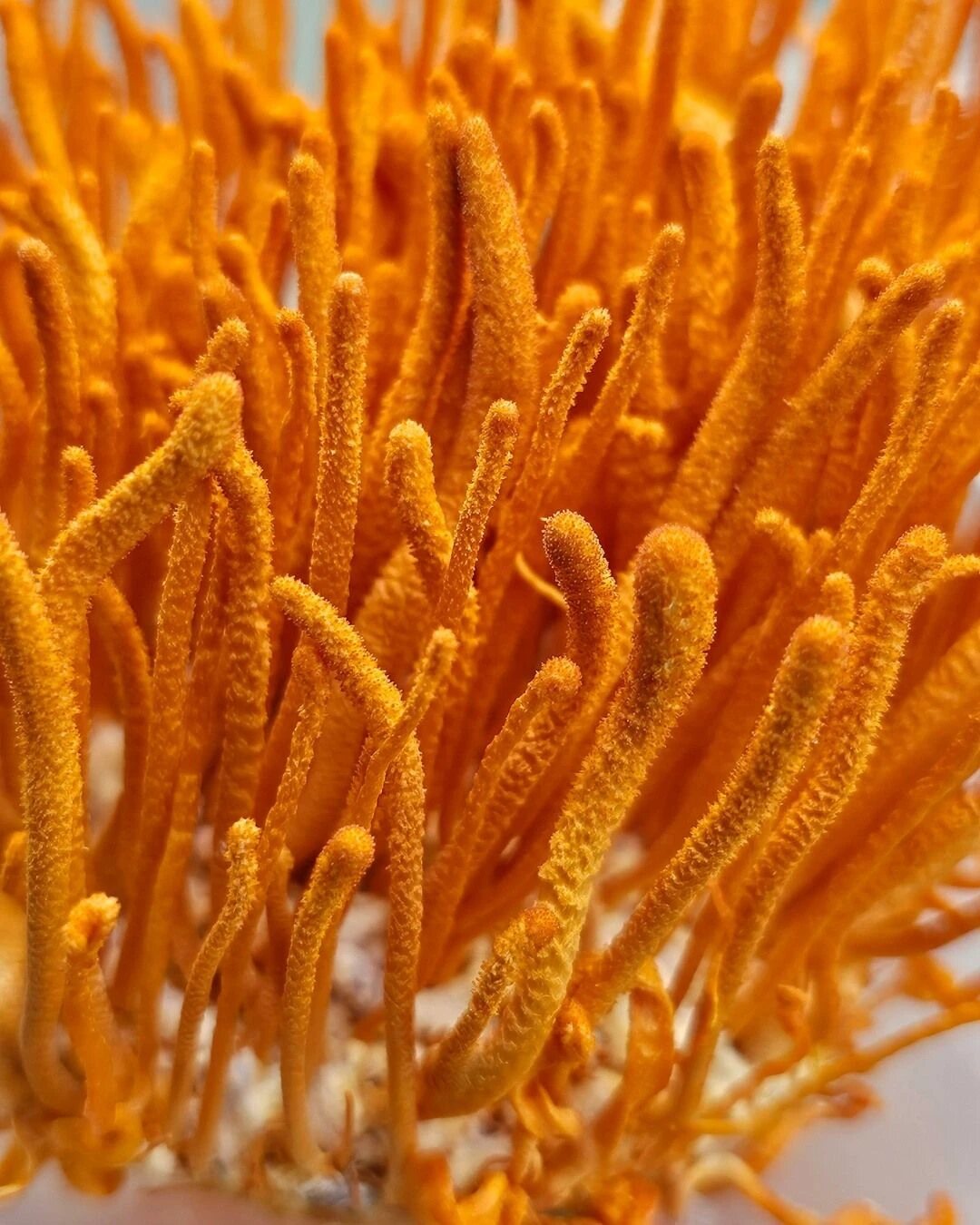
| What it looks like | A brown dried caterpillar with a dark stalk | Bright orange, club-shaped strands |
| Insects | Yes — the fungus grows from a caterpillar | No — grown on rice or grain |
| Cordycepin | Low | Naturally higher (ours is 11%+) |
| Price | Very high — often lakhs of rupees per kilo | Far more affordable |
| Consistency | Varies with every harvest | Controlled and testable lot by lot |
| Sustainability | Heavy harvesting pressures wild meadows; listed as Vulnerable by the IUCN | No pressure on the wild |
Which one should you buy?
For everyday use, food, teas and supplements, Cordyceps militaris is the practical choice: it is consistent, vegetarian-friendly, affordable and naturally rich in cordycepin. Wild Keeda Jadi is a rare natural product with cultural value, but it is expensive and hard to verify.
How to avoid confusion
- Ask which species it is — militaris or sinensis.
- Ask whether it is fruiting body or mycelium grown on grain (fruiting body is what you want).
- Ask for the cordycepin percentage and how it was tested (HPLC is the standard method).
- Be careful with very low prices for “wild” Keeda Jadi — genuine wild product is rarely cheap.
More questions to ask: read How to choose a Cordyceps supplier.
Dried Cordyceps Militaris (Keeda Jadi)
Whole fruiting bodies, lab-grown in Gurugram, cordycepin 11%+.
For information only. Not medical advice. Consult a doctor, especially if pregnant or on medication.