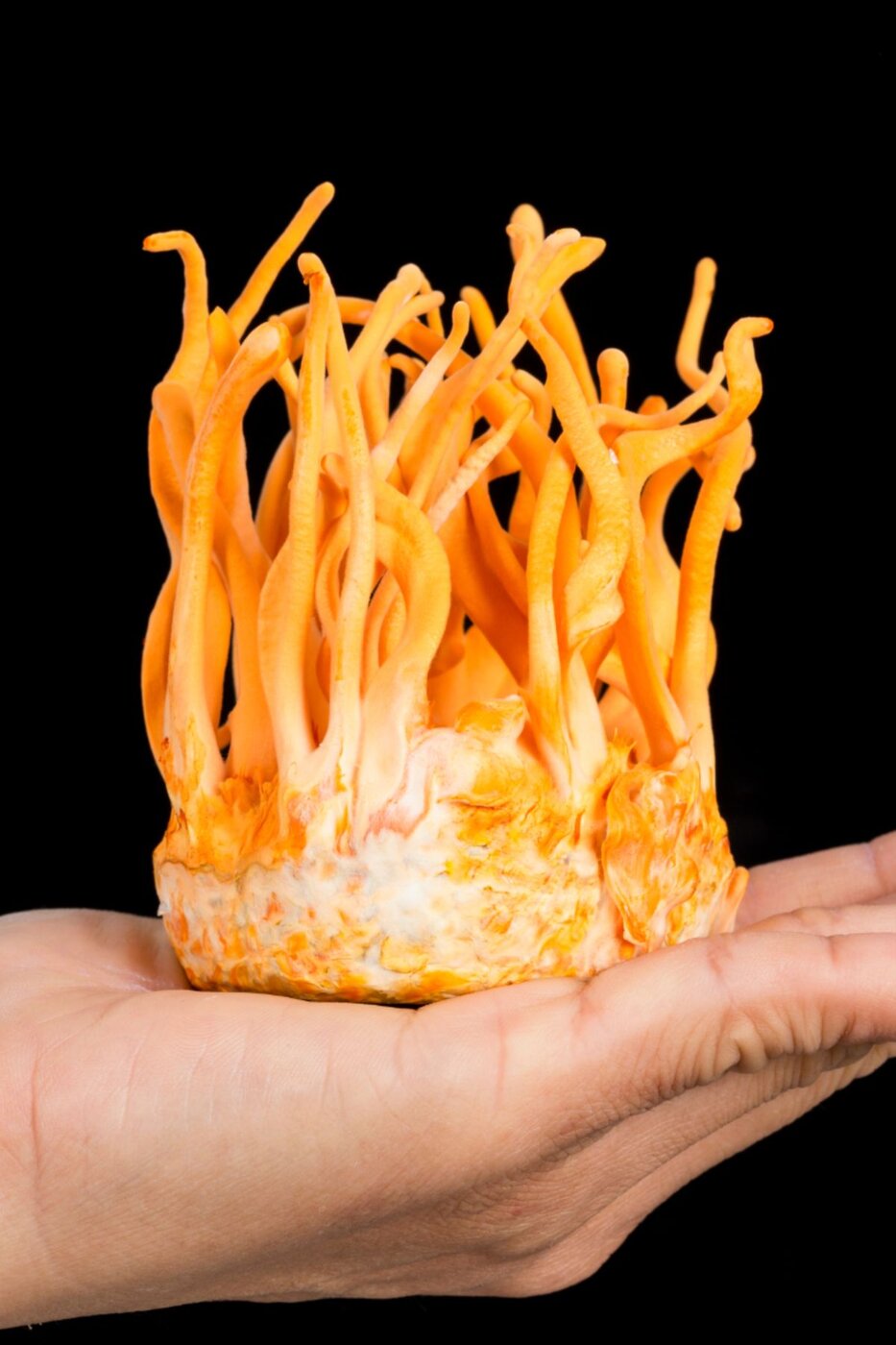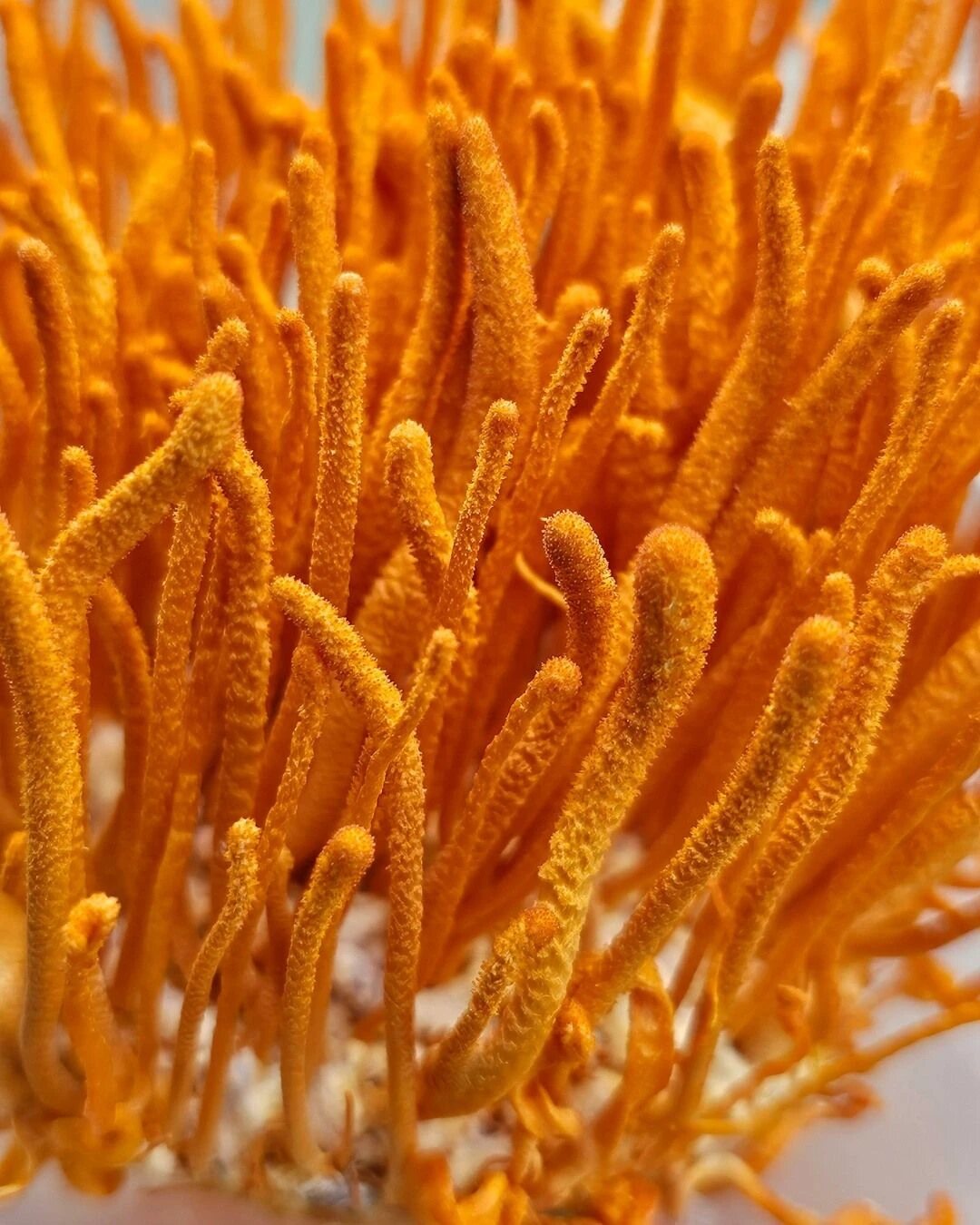
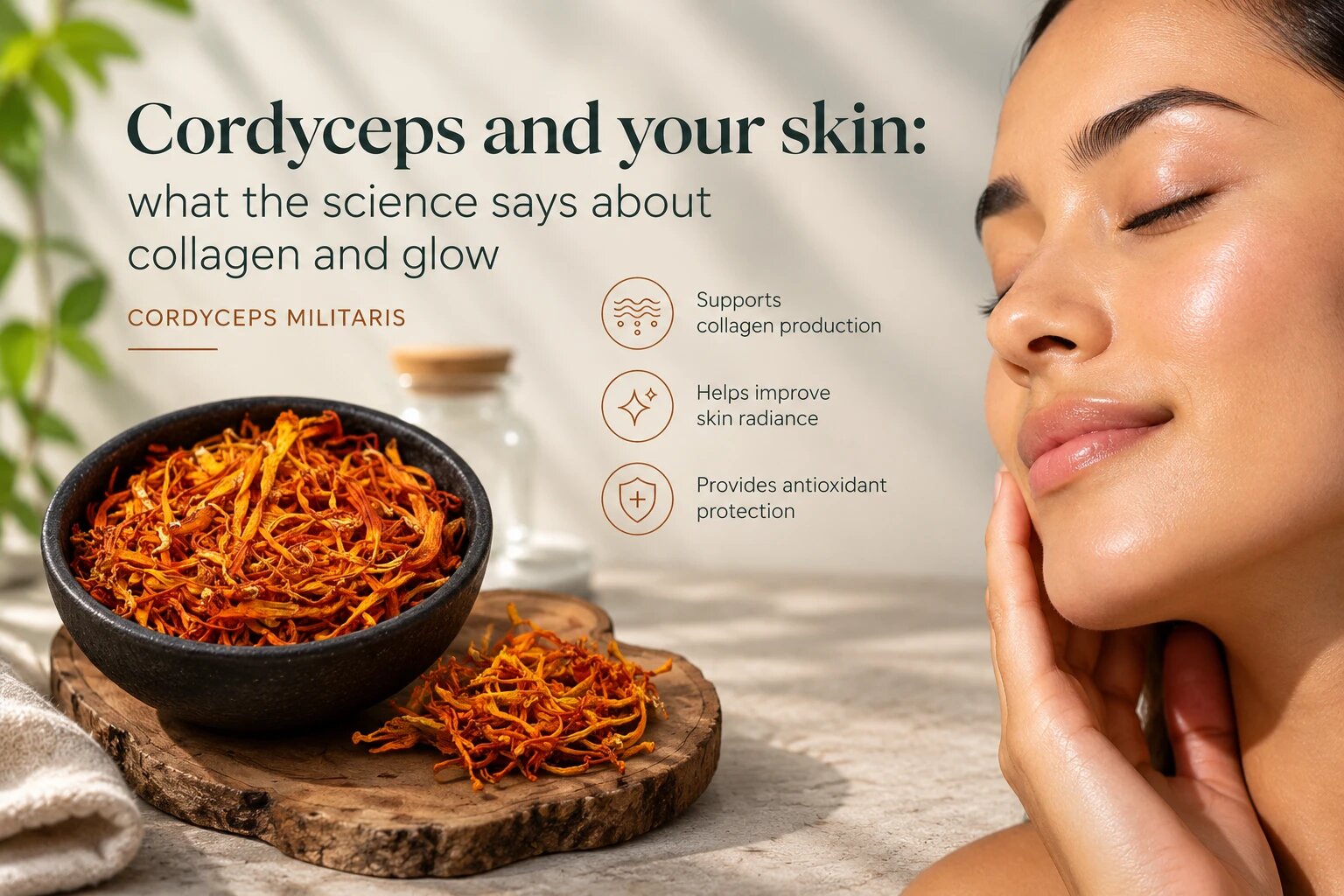
Why collagen matters
Collagen is the protein that keeps skin firm and springy. From our mid-20s the body makes a little less of it every year, and sunlight speeds up the loss. UV rays switch on enzymes called MMPs (matrix metalloproteinases), especially MMP-1, which break collagen down. Fewer collagen fibres mean fine lines, wrinkles and sagging over time.
So there are two ways to look after collagen: help the skin make it, and protect what you already have from being broken down. This is where Cordyceps has caught researchers’ attention.
What laboratory studies found
Human skin cells · UV damage · 2009
Scientists exposed human skin cells (dermal fibroblasts) to UVB light, then added cordycepin, the key compound in Cordyceps militaris. Cordycepin significantly reduced the UV-triggered rise in MMP-1 and MMP-3, the enzymes that break down collagen. Suggests it may help protect collagen from sun damage.
Cordyceps militaris extracts · 2022
Researchers compared extracts of Cordyceps militaris fruiting bodies and mycelium. The extracts directly blocked MMP-1 and elastase, the enzymes that break down collagen and elastin, and cordycepin was identified as a main reason. The extracts also showed strong antioxidant activity. Suggests support for firmness and elasticity.
Skin cells under oxidative stress · 2014
A hot-water extract of Cordyceps militaris protected human skin fibroblasts from oxidative stress, a major driver of skin ageing, and reduced signs of early cell ageing. Suggests antioxidant protection for skin cells.
Cordycepene pigment · 2019
An orange pigment isolated from Cordyceps militaris helped human skin fibroblasts grow and helped repair cells damaged by UV light. Suggests support for skin cell repair.
Even skin tone
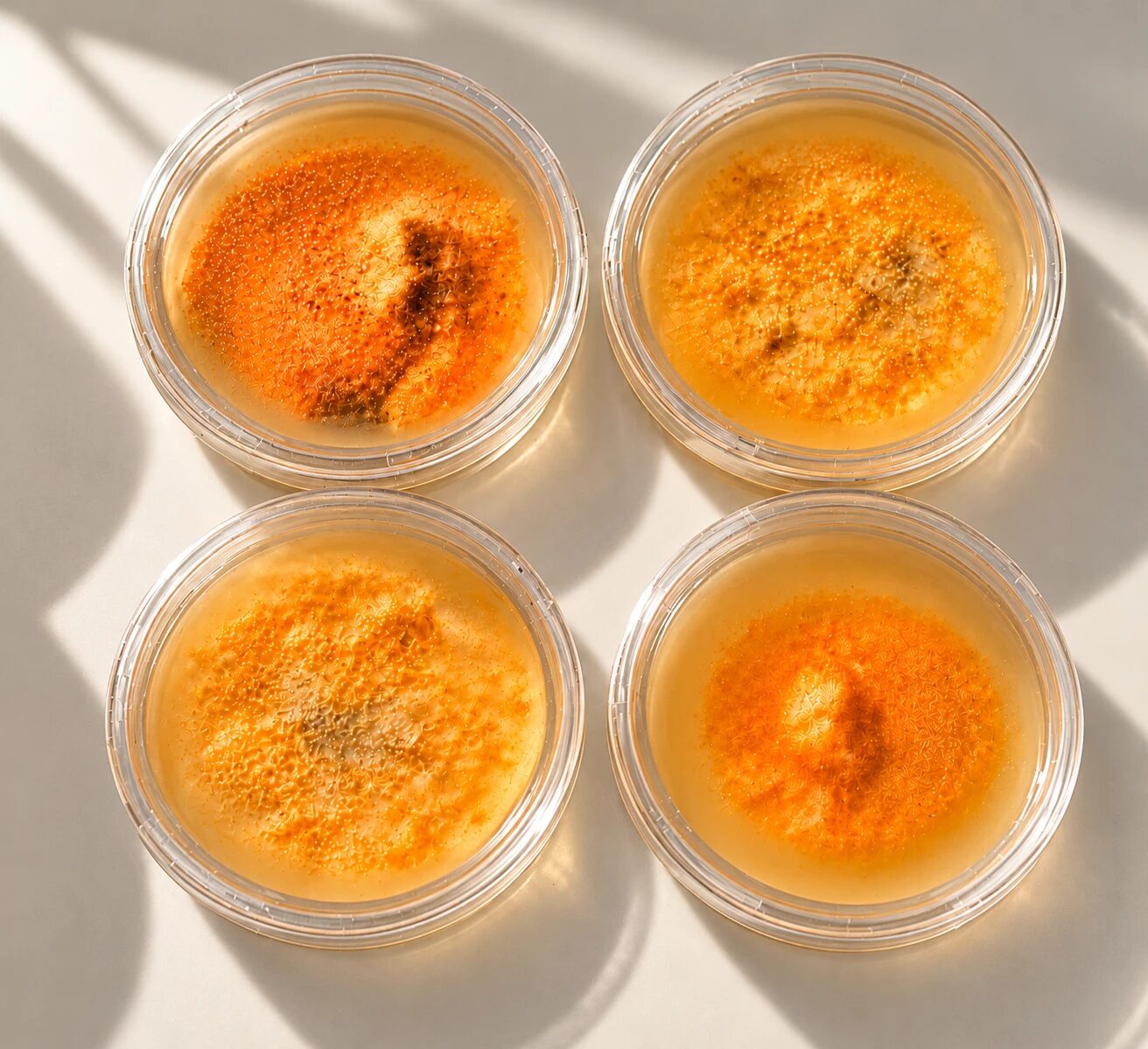
Dark spots and uneven tone come from too much melanin. Two Korean laboratory studies (2010 and 2013) found that Cordyceps militaris extracts reduced melanin production in pigment cells by slowing the enzyme tyrosinase. This is why Cordyceps is being explored as a brightening ingredient in skincare.
A traditional beauty tonic
In Traditional Chinese Medicine, Cordyceps has been traditionally used as a tonic for vitality and healthy ageing, and nourishing tonics like it were valued for a healthy complexion. Modern research is now looking at the compounds behind that reputation: cordycepin, adenosine, antioxidant carotenoids and polysaccharides.
So, does Cordyceps boost collagen?
| In short | |
|---|---|
| What studies suggest | It may help protect collagen and elastin from breakdown |
| Also seen in the lab | Antioxidant protection, UV repair and more even tone |
| Still unknown | No human trials yet on skin or collagen levels |
The honest answer: lab studies suggest Cordyceps may help protect the collagen you have, especially from sun damage, rather than directly building new collagen. These are promising early results in skin cells, not proof that a supplement or cream will change your skin. Sunscreen, sleep, a balanced diet and not smoking remain the basics of healthy skin.
How people include it

- A Cordyceps tea or golden latte as part of a daily routine.
- Powder added to smoothies, alongside vitamin C-rich fruit.
- Skincare products that list Cordyceps militaris extract as an ingredient.
Try our Cordyceps recipes: morning tea, ginger-tulsi kadha, golden latte and soup.
Who should be careful
Speak to your doctor before taking Cordyceps if you are pregnant or breastfeeding, take blood-thinning medicines or medicines for blood sugar, have an autoimmune condition, or have surgery coming up. Patch-test any new skincare product.
Dried fruiting bodies and powder from our lab in Gurugram.
Sources
Cordycepin inhibits UVB-induced matrix metalloproteinase expression in human dermal fibroblasts (2009), Experimental & Molecular Medicine. Mycelium and fruiting body of Cordyceps militaris: antioxidation, skin matrix degradation and anti-tyrosinase activity (2022), Pharmaceutical Biology. Cordyceps militaris extract protects dermal fibroblasts against oxidative stress (2014), Nutrients. Cordycepene from Cordyceps militaris and human skin fibroblasts (2019), Applied Microbiology and Biotechnology.
For information only. Not medical advice. Consult a doctor, especially if pregnant or on medication.